
Home > Health > ThyroHerb™
An underactive thyroid as a hidden cause of hair loss – even if your blood tests seem 'perfectly fine'
From hair loss to a full head of hair in just 5 months: How I finally got thick, healthy hair again after 5 years of despair

By Sophie Turner

16 March 2026 • 3 min read

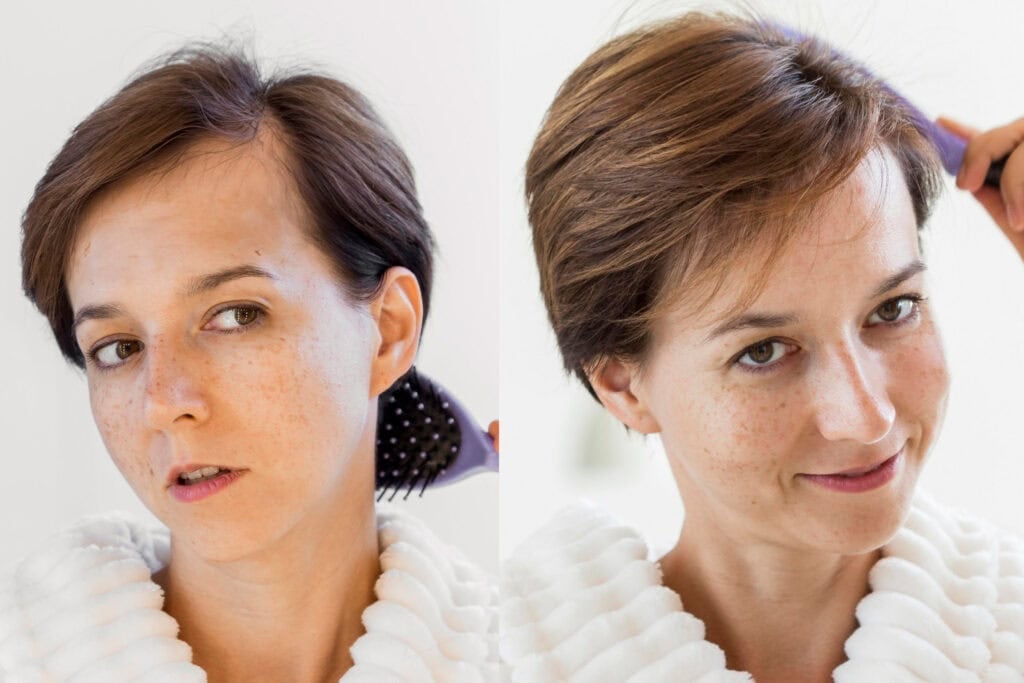
My hairbrush was full of hair again – just like every morning.
The same picture in the shower: clumps of hair left in the drain.
And every time I looked in the mirror, I knew it was getting worse.
At one point I didn't recognize myself anymore.
Not only because my hair became thinner, drier and weaker.
But because I felt like I had lost myself.
I was constantly tired, easily irritated and could no longer concentrate properly on anything.
I slept eight hours a night, but woke up feeling like I had run a marathon during the night.
My doctor kept saying:
Your blood tests are fine. This is normal for your age.
But deep down I knew something was wrong.
I felt like a stranger in my own life.
And no one took me seriously.
Hi, I'm Hannah, and my hair loss started about five years ago.
It came on slowly.
A few extra hairs in the brush.
Nothing to worry about, I thought then.
Everyone loses hair. It's normal.
But month after month, more and more hair remained in my brush.
I had to clean the shower drain every day.
My ponytail, once thick and full, suddenly felt thin and limp.
One evening I picked up an old photo album.
There I stood, ten years ago, with thick, shiny hair.
I held the photo next to my reflection and burst into tears.
How could I have lost so much hair?
I tried everything to get my old hair back:
Expensive caffeine and biotin shampoos.
Hair vitamins that cost a fortune.
Even an expensive scalp serum that a friend recommended.
Nothing helped.
The hair loss only got worse.
And on top of that came extreme fatigue, concentration problems and dry skin.
It was only when I really started to look into my complaints that I came across the real cause of my hair loss: my thyroid.
I had been diagnosed with an underactive thyroid nine years earlier.
Every morning I took my levothyroxine promptly.
And at every check-up my GP reassured me:
Your blood values are perfectly adjusted.
But how could it be that I still felt so bad?
That I kept losing hair even though my results looked 'great'?
What I didn't know at the time: the hair loss, the fatigue, the irritability and the concentration problems all had the same cause.
And it had nothing to do with my age, my genes or the wrong shampoo.
It was in some overlooked mechanism in my body.
An essential process necessary for thyroid hormones to work at all.
Now that I look back on this with the knowledge I have today, everything finally falls into place.
Within a few months, not only did my hair loss stop…
My hair also started growing again.
Little baby hairs covered my scalp again.
My existing hair became stronger, shinier and more vibrant.
But that wasn't all.
My energy came back.
My concentration.
My spark came back.
I finally felt like myself again.
When I shared my approach with a few friends who had been struggling with thyroid problems for years, something special happened:
They noticed the same changes. More energy. Less hair loss. A renewed zest for life.
Then I realized: I'm not alone in this. Thousands of people suffer in silence, unaware that there is a solution .
That's why I want to share my story – because I want to help you too.
No one should feel lost and suffer in silence today.
In this experience story you will read:
🦋 Why your thyroid is not properly balanced despite L-thyroxine and 'good' blood values – and how this leads to hair loss
🦋 Why shampoos don't provide a solution
🦋 Which organ is often overlooked in thyroid problems (and hair loss)
🦋 How to properly support your body, potentially lower your thyroxine dosage, feel better – and get thicker, healthier hair again
I'll explain exactly where the real problem lies, what the real cause of your hair loss is, and why your thyroid medication isn't doing what it should.
I'll show you the method that helped me control not only my hair loss, but almost all my other complaints as well.
This method works for an underactive thyroid, for Hashimoto's – and even if you no longer have a thyroid gland at all.
This article is the result of years of research and my own experience with this condition.
In several places, I refer to scientific studies via footnotes (in parentheses). These can be found at the bottom of the article and are accessible to everyone.
Understand your blood values – before they continue to mislead you
I was at the doctor again.
Tired, exhausted, suffering from hair loss, dry skin and totally empty.
Once again blood was drawn – just like all the times before.
The studies that were done:
– the TSH value
– the fT4 value
Sounds medical? It is – but I'm going to explain exactly what you need to know.
What is the TSH value?
The TSH value indicates how much thyroid hormone your body needs.
The higher the TSH, the greater the thyroid hormone deficiency.
Almost every doctor measures this value.
What is the fT4 value?
The fT4 (free thyroxine) level measures how much T4 – the inactive thyroid hormone – is in your blood .
This hormone is prescribed to you as a medication , for example levothyroxine.

The blood test my GP did
My GP immediately saw that my TSH level was too high.
My fT4 value was too low.
At that time I didn't fully understand the values yet.
But my GP knew – and that gave me confidence.
I was told:
“The higher the TSH, the less thyroid hormone is available.”
In my case my TSH was 3.1!
That's why my GP immediately diagnosed an underactive thyroid.
After the diagnosis, I initially felt relieved.
I was no longer completely in the dark.
At least now I had an explanation for my hair loss.
My doctor gave me hope that things would get better.
After all, I wasn't the only one with this problem.
With the right adjustment of the medication, everything would return to normal and the complaints would disappear.
Which brings us to the topic: “setting your medication correctly.”
If you also have an underactive thyroid, you will probably recognize this:
Your GP will prescribe L-thyroxine – the standard treatment for thyroid problems.
My GP initially started me on 25 mcg of L-thyroxine.

L-thyroxine, an artificially produced thyroid hormone, is one of the most commonly prescribed medications in United Kingdom.
“Your thyroid levels are now back to normal – your thyroid should be functioning normally.”
Full of hope, I went to the chemist, picked up my thyroid medication and took it faithfully for a while.
But somehow nothing changed, except that taking the tablets became a regular part of my morning routine.
A month later, the GP increased the dose from 25 to 50 mcg.
I went back to the doctor and heard:
"Ms. Turner, your hair loss is not a coincidence. It's a cry for help from your thyroid."
Yes, my blood values were fine.
And I did indeed feel better for a while.
But that only lasted a few months.
The hair loss got worse
Five months after my diagnosis, my husband asked:
“What good are those 'good blood values' if your hair loss doesn't improve?”
He was right.
Since increasing my dose and taking the medication regularly, not only had my hair loss gotten worse, but so had my other complaints.
I gained 5 kg — without changing my diet.
And the constant fatigue?
This remained persistent, as did the hair loss.
So I started looking for other solutions .
Spent over £400 on hair loss – and nothing helped
I stared at the collection of bottles on my bathroom shelf, full of failed hope.
"Hello Mrs Turner, your blood results have come back much improved."
· Caffeine shampoo: £20.95
· Biotin complex: £31.50
· Scalp serum (recommended by a friend): £49.95
· Over £100 in a single month.
I had spent so much money, had so much hope, experienced so much disappointment.
And yet I had made no progress.
The same brush every morning.
The same pain.
If you're reading this and just starting to see the first hairs on your comb – don't wait as long as I did.
Because eventually the moment comes when you can't hide it anymore.
For me, that was on the most beautiful day of my daughter's life.
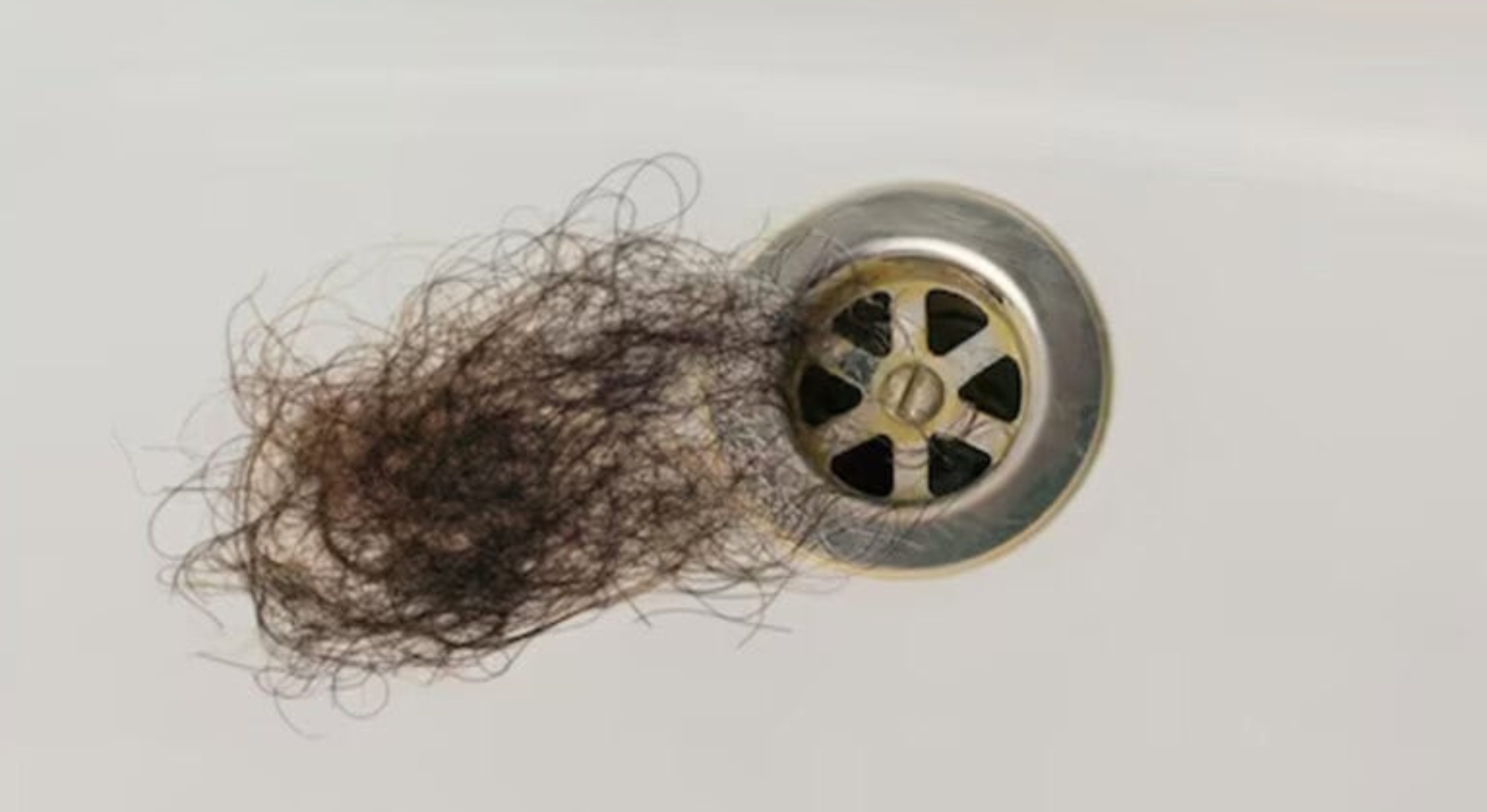
This is what my shower drain used to look like. I'm sure you recognize it.
My daughter's wedding – the day I'd been dreading for months
She radiated in her white dress.
The family was eager to have the photos that would last a lifetime.
I tried not to think about how the sunlight would hit my thinning hair .
How the camera would capture every bald spot.
How, years later, I would look at these photos and see only my thinning hair instead of the joy in my eyes.
My hairdresser had done her best.
With volume spray and expert blow-drying.
But you can't create hair where there's nothing left.
After the ceremony, amidst the champagne and congratulations, I felt a hand on my shoulder.
Sandra, an old college friend.
We hadn't seen each other for years.
She gently pulled me aside, looked at my hair and told me that she had also had problems with her hair.
“Are you having thyroid problems?” she whispered.
I was stunned.
How could she know that?
She recommended a doctor who had helped her with her hair loss.
“He understood what everyone else was overlooking,” she said.
Her words continued to echo in my head long after the wedding guests had gone home.
Her own hair was full and shiny.
I knew: this was my last hope.
The next morning I held the little note she had given me.
I called Dr. Turner's clinic— and got an appointment a week later.
Hair loss: a cry for help from your thyroid
Already at the first consultation something felt different.
He listened to me and didn't interrupt me.
And when I told him about my hair loss and increasingly visible scalp, he nodded slowly – and then said a sentence I will never forget:
"Ms. Turner, your hair loss is not a coincidence. It's a cry for help from your thyroid."
He explained that up to 80% of women with an underactive thyroid experience hair loss — even if they have been taking their L-thyroxine faithfully for years.
Hair follicles are particularly sensitive to thyroid hormones.
If they don't get enough active hormone, they weaken , shrink and ultimately produce only thin, brittle hair that falls out prematurely.
Dr. Turner explained how thyroid hormones actually work, what exactly TSH, T4, and T3 are, and much more.
I will try to summarize it for you as clearly as possible.
The difference between T4 and T3
There are two main thyroid hormones: T4 and T3 (sometimes also called fT4 and fT3).
Our thyroid gland produces about 80% T4 and 20% T3.
With an underactive thyroid, the gland does not produce enough T4 and T3.
That's why you are prescribed tablets such as L-thyroxine.
These tablets are intended to supplement the missing hormones.
Dr. Turner was not impressed.
He said that taking L-thyroxine alone won't work because it's only T4.
T4 is the inactive thyroid hormone.
It's simply a storage form—not active in the body.
T3, on the other hand, is the active thyroid hormone that supplies every organ with energy.
T4 must be converted into T3 in the body — to be activated.
Only when this conversion from T4 to T3 takes place properly can the cells produce energy as they should.
Then we have energy, we are no longer exhausted and – drum roll – the hair becomes thick and full again.

The link between hair loss and an underactive thyroid is explained in detail in this study.
How Your Thyroid Affects Your Hair Growth
The active thyroid hormone T3 is one of the most important hormones in the body.
Why? Because it provides energy to every cell.
When we have enough T3, we don't feel cold, our metabolism runs faster, we have more energy and both our intestines and scalp have better blood flow.
In short, T3 determines how quickly numerous metabolic processes in the body occur — including hair growth .
Normally each hair goes through three phases:
Growth phase
Transition phase
Resting phase

Without enough T3, hair remains in the resting phase for far too long — meaning:
It falls out , but does not grow back.
The same applies to nails: people with an underactive thyroid often have brittle nails that grow slowly.
Vertical ridges in the fingernails are also a common, but often overlooked, sign of hypothyroidism.
Both hair and nail growth are highly dependent on the protein keratin.
Keratin is the main building block of our hair and nails.
And to produce keratin, the body needs energy — or T3.
If T3 is missing, keratin cannot be produced.
The hair becomes thinner, breaks easily and hardly grows back.
Nails become brittle and the risk of nail fungus increases.
The natural hair growth cycle is disrupted.
After all of Dr. Turner' explanations, I finally understood why shampoos, vitamins, and ampoules hadn't helped.
As long as my body wasn't producing active T3, my hair didn't stand a chance.
Why Thyroid Medication Sometimes Doesn't Work
I now understood: T3 is the important thyroid hormone.
Exactly — T3, the value my GP hadn't even measured at first!
Dr. Turner explained:
"Up until now, you've only been taking T4 medication. But your body has to convert T4 to T3, otherwise symptoms like hair loss won't stop."
Thyroid activation occurs in three simple steps:
Production of thyroid hormones (T4)
Conversion of T4 to the active form, T3
Transport of T3 to the cells
Most doctors focus only on step 1 by prescribing synthetic hormones such as levothyroxine .
As a result, the blood values look good again (doctors think their work is done), especially the TSH and T4 values.
But the complaints often do not disappear.
Your GP will then say that you are “well-adjusted” because T4 and TSH look good.
But if you're still constantly tired, have hair loss, difficulty concentrating, experience cold hands, digestive problems, and your metabolism is so slow that you gain weight just by looking at a slice of cake — then in most cases it boils down to one thing:
A conversion disorder.

When Dr. Turner explained all this to me, it was the first time in 15 years that I felt truly understood—and well-informed.
Slowly the pieces of the puzzle fell into place, and Dr. Turner showed me that my hair loss could only be due to the inactive T4 from the tablets not being converted into active T3.
I suffered from a conversion disorder.
The Thyroid Deception
What goes wrong with traditional treatment:
❌ Too many doctors only look at TSH and T4 and completely ignore T3.
Treatment is based on blood values, not symptoms. If TSH and T4 appear normal, the GP will continue to insist that everything is fine.
❌ They persist in prescribing synthetic T4 and increasing the dose, even though the symptoms persist.
The connection between the thyroid and the liver
After diagnosing me with a metabolism disorder, Dr. Turner explained to me the crucial role of the liver.
Up to 80% of thyroid hormones are converted in the liver.
Has a doctor ever explained to you that the thyroid and liver are closely connected?
Step one: The inactive T4 is taken up by the liver cells .
These cells contain enzymes (deiodinase enzymes) that are responsible for the conversion.
These enzymes remove one iodine atom from the outer ring of the T4 molecule.
This converts T4 into T3 (the active thyroid hormone).
You can look at it this way:

The T4 cannot be converted in the liver
Normally, the enzymes have no difficulty removing the iodine atom from T4.
But in many people with a conversion disorder, the deiodinase enzymes do not function properly.
The T4 taken through medication can therefore only be converted into T3 to a very limited extent.
As a result, the dose continues to increase.
Imagine a sink where the drain is becoming increasingly clogged.
The solution isn't to just add more water.
The solution is to clear the drain again so the water can flow.
According to Dr. Turner, two problems need to be solved.
Problem #1: The Overworked Liver
Liver cells do not only convert T4 to T3.
The liver is the main organ for removing toxins from the body.
Toxins include exhaust fumes, smoke, plastic, electromagnetic pollution, pesticides, and heavy metals.
Years of medication and an unhealthy diet also weaken the liver.
And just as we prioritize tasks on a daily basis, so does the liver.
Recent estimates suggest that one in four people in United Kingdom now suffer from non-alcoholic fatty liver disease.
Cholesterol is often also elevated .
And yes — years of taking levothyroxine certainly doesn't make the liver's job any easier.
Medications weaken the liver, and a sluggish liver makes you feel sluggish.
It becomes a vicious circle.
We take a drug hoping to feel better, but at the same time accept the side effects — which weaken our organs .
Strange, isn't it, when you really think about it?
Can you imagine what condition my liver would be in if I continued taking levothyroxine every day for another 20 years?
Yes, thyroid hormones have their place in treatment.
And it doesn't make sense to suddenly stop.
But they should never be the only strategy for life.
Ultimately, the body must be stimulated to produce, convert and transport hormones itself again.
If this doesn't happen, you will remain trapped in the “thyroxine cycle” forever.
Besides an overworked liver, there is another problem that is almost always overlooked.
Problem #2: Missing nutrients needed for conversion
We now know that thyroid hormone conversion occurs mainly in the liver.
The conversion process is called 5'-deiodinase.
These deiodinase enzymes remove an iodine atom from T4 and convert it to T3.
To function properly, these enzymes require nutrients such as zinc and iron.
But the most important nutrient is selenium, a structural component of these enzymes.
Without enough selenium the conversion simply won't work. (1)

Research shows: Selenium deficiency can cause metabolism disorders
One study showed that patients with selenium deficiency had high T4 levels but very low T3 levels — indicating a metabolism disorder.
Here comes the big problem:
The soil in many parts of United Kingdom is poor in selenium, as in central regions of other countries.
This means that locally produced food is often low in selenium.
It is estimated that most people in United Kingdom do not get enough selenium from their diet.
That's why it's essential to support selenium levels — through diet or supplements.
Summary so far
✅ Your body needs the active thyroid hormone T3 — only then will symptoms such as hair loss, fatigue or weight gain improve.
✅ Thyroid medications such as levothyroxine only provide inactive T4.
✅ The conversion of T4 to T3 mainly takes place in the liver.
✅ If complaints persist despite medication, it is most likely a conversion disorder.
✅ Increasing the medication dose is NOT the solution.
How to treat a conversion disorder
If thyroid medication doesn't work for you, you likely have a metabolism disorder.
This applies to almost 80% of people with an underactive thyroid.
The good news: Once the disorder is addressed, you can feel significantly better within a few weeks.
Because your body can finally convert the T4 you take.
The active thyroid hormones reach your cells again.
Your hair becomes thicker, your energy increases, your mood improves.
And your metabolism speeds up, making it easier to achieve and maintain a healthy weight .
You feel lighter, more positive and more alive.
And this is happening while you may even be able to lower your medication dose — further helping your liver.
The vicious circle becomes a positive cycle:
The liver detoxifies and becomes stronger
T4 is converted better
You feel more energetic
Medication dose can be reduced
The liver is further relieved
Conversion improves again
Hair and energy improve even more
…and so on
So how do you fix a conversion disorder?
According to Dr. Turner—it’s very simple.
You only need to do two things:
Actively regenerate your liver
Providing your body with the nutrients it needs to convert thyroid hormones
Dr. Turner spoke about a method he uses with countless patients .
A method that focuses on the real cause of the disorder.
Here's the simplified explanation:
The Liver–T3 Method
You remember the 3-step system for thyroid activation:
Step 1: Production of T4
Step 2: Conversion from T4 to T3
Step 3: Transport of T3 to the cells
According to Dr. Turner, the most important step to address first is step 2, the conversion disorder.
Stimulating the body to produce its own T4 again (step 1) is difficult and time-consuming.
And I was already taking enough T4.
The lack of T4 wasn't the problem — it was the conversion.
Step 3 (transport) is generally not a problem once step 2 is resolved.
And step 2 produces the fastest improvement — usually within weeks.
Because most people already take T4.
Once the conversion disorder is addressed, it feels like the handbrake is released:
The levothyroxine (T4) you take is converted correctly.
You will immediately feel more energetic and less exhausted.
This makes it possible to gradually reduce your medication dose.
Your liver is relieved. And the metabolism improves even further.
Dr. Turner' Liver–T3 Method was developed specifically for people with hypothyroidism.
But it also works if you no longer have a thyroid gland or if you have Hashimoto's.
Because in those cases it is even more important to strengthen the conversion.
If there is little or no thyroid tissue left, you will always need synthetic T4, such as levothyroxine.
In that case, you cannot improve step 1.
But by focusing on step 2, the “handbrake” can still be released — and you can feel significantly better.
Dr. Turner' method is simple and based on providing the body with the vitamins and nutrients it needs for conversion.
These are also the nutrients that people with hypothyroidism are often deficient in.
The special thing: it is 100% natural.
No expensive medicines.
The method consists of two simple steps.

Step 1: Activate liver regeneration
The liver is chronically exhausted —as we know—because it is constantly busy removing toxins and waste products.
As a result, it can no longer properly perform one of its other crucial tasks: converting T4 to T3.
It is common knowledge that an overloaded liver often leads to fatigue.
The good news: the liver is the only organ in the human body that can completely regenerate itself.
Even better news: according to Dr. Turner, modern science has already identified several plant compounds that, according to studies, can actively regenerate the liver.
Because that is exactly what is needed: dietary changes alone are not enough.
You must actively regenerate the liver.
Dr. Turner recommends the following plant compounds:

Milk thistle
Milk thistle is a real powerhouse when it comes to liver health.
It is one of the medicinal plants richest in antioxidants.
This means that it neutralizes free radicals and reduces oxidative stress.
Milk thistle has now been very well studied in relation to liver function.
A study from Italy is particularly striking (2):

The following conclusions can be drawn from these findings:
Milk thistle neutralizes toxins and waste products in the liver veins
It prevents toxins from entering the liver cells
It stimulates liver regeneration and the production of new , healthy liver cells.
It promotes bile production and helps keep the bile ducts clean.
It supports the liver's detoxification capacity , especially in combination with artichoke
And that brings us to the second plant:
Artichoke
The most striking evidence comes from a study that attributed liver-protective effects to artichoke leaf extract (3):

This means that artichoke protects the liver cells and stimulates regeneration.
In his book “Heal Your Thyroid,” Anthony William goes even one step further.
He explains that artichokes contain many yet undiscovered substances that specifically support the thyroid gland.
These substances—particularly the plant nutrients in artichoke leaves—are said to help reduce lumps , tumors , and cysts in the thyroid gland.
These two herbal plants — milk thistle and artichoke — protect the liver and strengthen its function.
Almost like pressing a button.
Then it becomes clear:
A healthy, energetic liver makes for an energetic person.
Step 2: Micronutrients for conversion
There are two key nutrients that play a direct role in the conversion of T4 to T3 in the liver: selenium and glutathione.
Selenium
I've written a lot about selenium before.
Selenium plays a direct role in hormone metabolism in the liver — the enzymes that convert T4 to T3 are made of selenium.
But selenium can do even more.
As a cofactor it also plays a role in the production of thyroid hormones.
Selenium is essential for anyone with an underactive thyroid.
Glutathione
Glutathione is the most abundant and one of the most powerful antioxidants in the body.
In its active form it can neutralize free radicals.
Normally, glutathione captures these free radicals and protects our cells.
But when there are too many free radicals, glutathione becomes depleted.
Scientifically we say that glutathione becomes “oxidized” (used up).
Once depleted, it can no longer help — leaving the cells and their powerhouses more vulnerable to damage.
For example, studies show that people with Hashimoto's have less than half the amount of glutathione (GSH) in their serum compared to healthy individuals (4).

Yes, you read that right:
Less than half the glutathione!
That is why it is so important to supplement glutathione, so that the balance between oxidative stress and antioxidants is restored.
No doctor has ever said anything to me about glutathione — even though the research is crystal clear.
But that's not all:
Glutathione, together with selenium, directly influences the conversion of T4 to T3.
This was demonstrated in the following study:

Researchers found that people with impaired metabolism almost always had low glutathione levels (5).
Glutathione is therefore a crucial nutrient that most people lack for optimal hormone metabolism.
It is also one of the blood values that most doctors overlook and rarely test.
The result of all these nutrients?
Your liver can finally function at full capacity again.
T4 is converted into T3 and your metabolism starts.
And complaints such as hair loss, fatigue or brittle nails can finally improve.
I know — that was a lot of information at once.
That's why I've summarized the key points in the image below.

Now you're probably wondering, “How many artichokes should I actually eat per day?”
I wondered that too.
The answer: you would have to eat dozens of artichokes every day to get enough of the active ingredients.
The same goes for milk thistle.
And glutathione is a whole different story — you won't find it in just any drugstore.
However, after months of research, I finally found a solution that everyone with an underactive thyroid should know about.
Full focus on the thyroid gland
All the topics I've covered so far in this article can be found in your own research.
Thyroid health is well studied – the problem is that almost no one digs deep enough to really help people.
For example, most supplement manufacturers have “thyroid complexes” in their range, but anyone who really understands the subject will quickly notice: it is mainly a profit model.
If you look at the ingredients in these complexes, you will be left disappointed.
These manufacturers simply mix everything that is supposedly “good for the thyroid”.
A little selenium here, some iodine there, and preferably some tyrosine as well.
This may provide some support to the thyroid gland – but unfortunately, it won't make you feel any better.
After months of research and collaboration with Dr. Turner, it became clear to me:
The topic of thyroid health is poorly addressed.
By both most general practitioners and most supplement manufacturers.
But there is hope.
A few months ago I discovered a company that focuses entirely on supplements for people with thyroid problems.
The company is based in United Kingdom and focuses entirely on natural thyroid support.
Their approach combines the power of nature with the latest scientific insights.
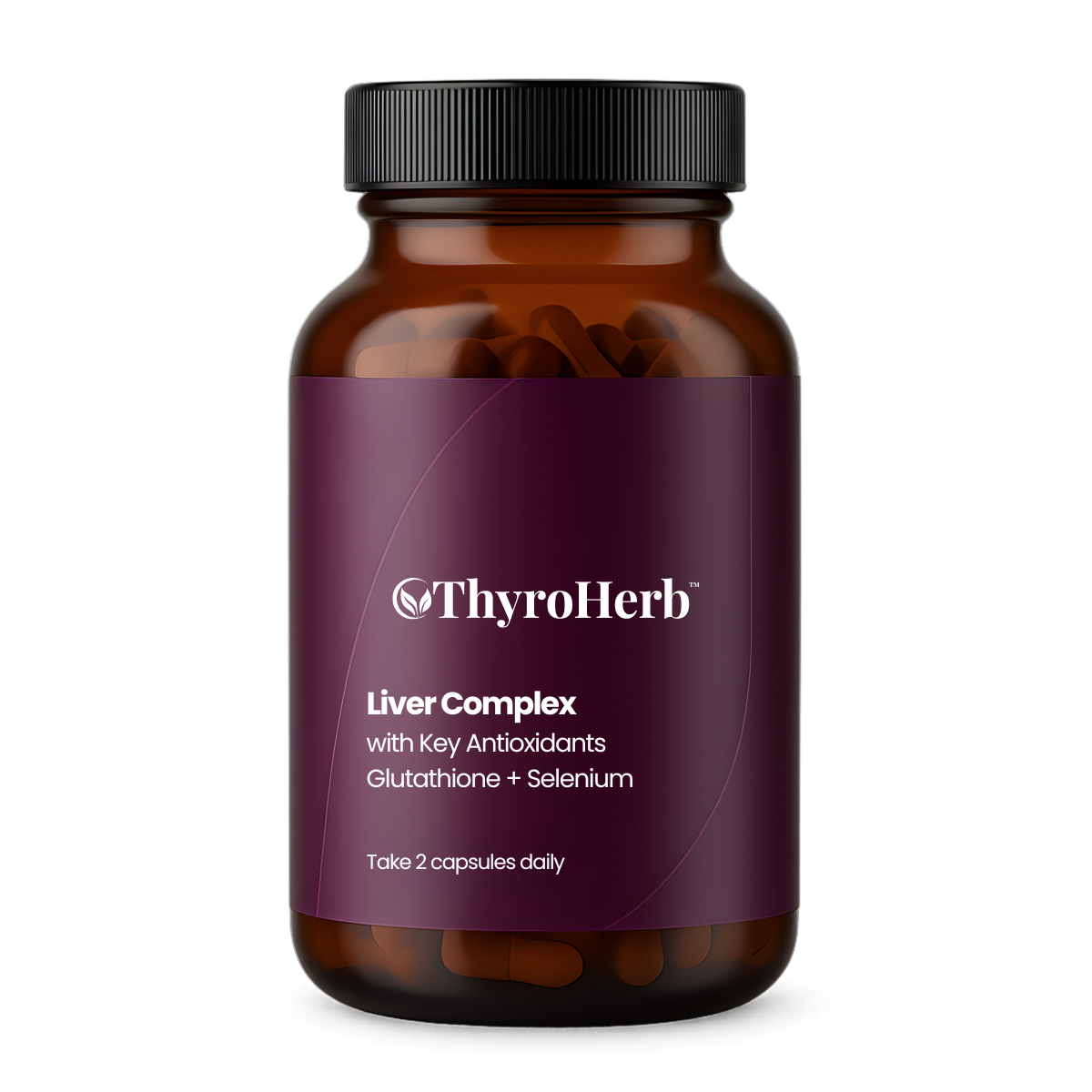
Based on all the research findings I discussed in this article, they developed a product called ThyroHerb™ .
If you look at the ingredients, you can immediately see that the team behind this product really understands how the body works and has carefully studied the latest research.
I showed the product to Dr. Turner and patients in his clinic now take ThyroHerb™ regularly .
But what exactly is in ThyroHerb™ – and why?
ThyroHerb™ in detail
The name says it all: the product has been developed to support the conversion of thyroid hormones.
In fact, it is a very effective liver complex, supplemented with nutrients that are especially important for the conversion of thyroid hormones.
There is no comparable product in United Kingdom.
Here are the ingredients and why they were added:
Glutathione
ThyroHerb™ contains reduced glutathione (the active form).
I have already explained why glutathione is so essential for the conversion of thyroid hormones.
Only with sufficient glutathione can you control oxidative stress and support your body in converting and transporting thyroid hormones.
What makes ThyroHerb™ special: it also contains the amino acids that form the building blocks of glutathione.
This is intended to boost your own glutathione production – because what the body can produce itself is used much better.
Glutathione is formed from the amino acids glutamine, glycine and cysteine.
Research shows that cysteine is the limiting factor for most people.
That is why ThyroHerb™ not only contains glutathione and cysteine in high doses, but also the precursor of cysteine: NAC (N-acetyl-cysteine) and L-methionine.
Interestingly, methionine is also believed to help with hair loss!
Milk thistle, artichoke and dandelion
I have already written something about the first two ingredients.
Milk thistle is the ultimate secret weapon to repair the liver in just a few weeks.
Dr. Turner also relies on artichoke and milk thistle for liver detoxification and lowering cholesterol.
Dandelion root offers similar benefits for liver health.
All three plant extracts are contained in ThyroHerb™ in effective dosages.
In addition, choline has been added to further support liver function.
Selenium and Coenzyme Q10
Selenium is also found in ThyroHerb™.
As I explained earlier, there are areas in United Kingdom with selenium-deficient soil — selenium supplementation is therefore particularly useful.
Selenium plays a central role in the metabolism of thyroid hormones, as it protects against oxidative stress and is part of the deiodinase enzyme responsible for this conversion (6).
It is also needed as a cofactor in the production of thyroid hormones.
Coenzyme Q10 has been added because it is essential for energy production in the cells and therefore helps against fatigue.
There are also studies that show that statins (cholesterol-lowering drugs) decrease the body's stores of CoQ10 (12).
If you are taking statins (as I used to be), the CoQ10 in ThyroHerb™ is a welcome addition.
When I looked at the ingredients and their dosages, everything finally fell into place and I wanted to give it a try.
The fact that they go a step further — adding not just glutathione, but also the precursor (L-cysteine) and even the pre-precursors (L-methionine and NAC) — clearly shows how well thought out the formula is.
At that point, I was fully engaged in the topic—and relied on Dr. Turner' guidance.
Still, I thought: this almost sounds too good to be true.
Because I had struggled for years.
My hair kept falling out and my body no longer felt like my own.
Everything changed gradually — but looking in the mirror, I saw a woman I barely recognized.
Tired. Exhausted. Empty inside.
Deep inside, a spark kept saying: There must be a solution. Something must help.
As I learned more about ThyroHerb™ , I also found testimonials.
No polished five-star marketing responses.
But real voices on Facebook:

After reading those comments, I ordered a three-pack of ThyroHerb™ that same evening .
I knew immediately: if it helped so many others, it would help me too.

My first weeks with ThyroHerb™
Two days after placing my order, ThyroHerb™ arrived .
Each jar contains 60 capsules.
The daily dosage is 2 capsules per day.
It is recommended to take the capsules after your second meal of the day , for example during lunch or in the afternoon.
You should continue taking your thyroid medication exactly as before.
Because ThyroHerb™ contains only natural ingredients, it is completely safe and can be used without any worries.
You really can't go wrong!
One jar lasts for 30 days, so I immediately had a three-month supply.
I advise you the same: this is a marathon, not a sprint.
You must use ThyroHerb™ for at least 3 months.
At first glance, the packaging looks very premium.
It is not a cheap bag or plastic jar, but a small, high-quality glass jar.
I loved the label on the jar: “Developed for your thyroid.”
The capsules are also easy to take.
From then on I took 2 capsules daily.
I continued taking my levothyroxine tablets as usual.
I was hoping ThyroHerb™ would help me regain fuller, healthier hair.
So that I could feel like myself again and enjoy taking pictures again.
And what can I say…
I never expected things to change so quickly.
But after just one week, I felt exactly what so many women had described in their reviews.
Suddenly I had energy and could concentrate much better – for the first time in years I no longer felt like a dead battery, but as if someone was finally recharging my energy.
And the hair loss?
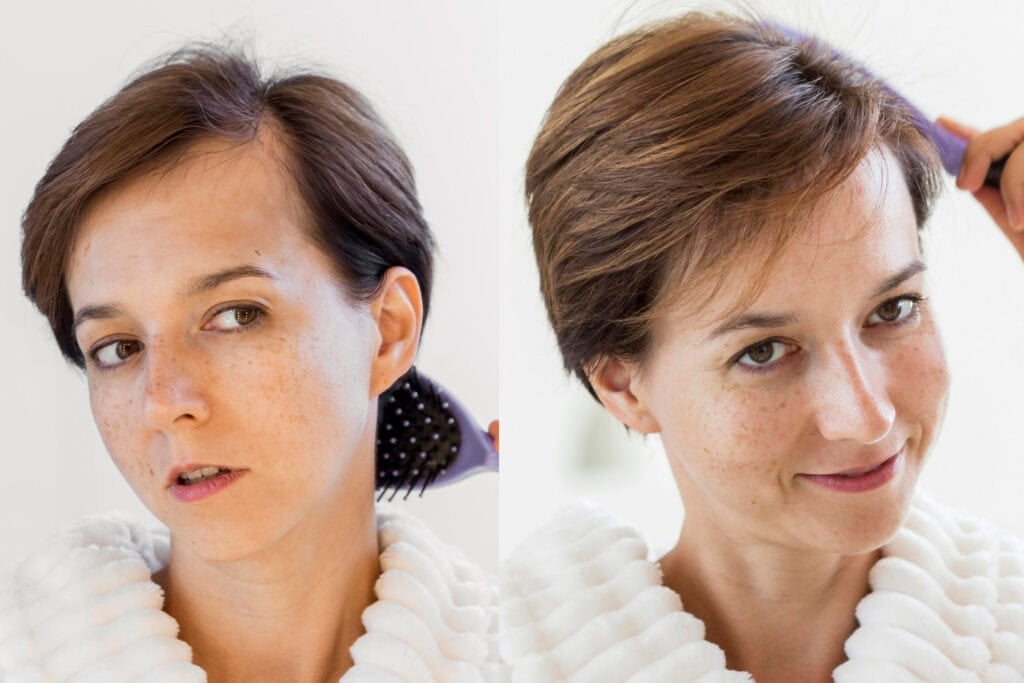
Five months later: I'm enjoying photography again
When I started ThyroHerb™ , I had hope – but also doubts.
Today, five months later, I have something back that I haven't had for years: my self-confidence.
My hair has become visibly fuller.
It feels like my body is finally getting what it needed.
And the funny thing? It was never just about the thyroid.
It was the support for my liver that I was missing.
And my blood tests confirm it:
My thyroid levels have improved tremendously – a huge success for me.
Not only T4, but especially the active T3 is finally where it belongs.
Together with my GP, I slowly started reducing my levothyroxine – I now only take 50 mcg.
And surprisingly enough, even with this lower dose I feel better and better.
My TSH is now 1.5.
My free T4 remains stable within the healthy range.
And for the first time in years, my free T3 is finally normal!
Out of curiosity, I also had my liver values checked – after all, milk thistle and artichoke have a direct effect on the liver.
And indeed: my cholesterol and liver values have also improved.
For me the proof:
The body begins to regulate itself once you finally give it the right tools.

These are my current blood values.
I'm genuinely curious to see what my values will look like in a year.
Especially because so many complaints have to do with the thyroid gland.
It may sound unbelievable, but it's absolutely true.
Because almost all complaints are caused by a deficiency of thyroid hormones.
Almost all complaints have the same cause.
If you solve the problem of converting T4 to T3, the symptoms will disappear.
Because your cells are finally getting the essential T3 they've been waiting for.
Dr. Sophie Turner explained it this way:
🚨 Too little energy (T3) for your liver = high cholesterol levels, because the breakdown of cholesterol in the liver no longer works properly
🚨 Too little T3 = a slow metabolism , making it almost impossible to maintain weight
🚨 Too little T3 for your intestines = digestive problems , because your intestines are not properly supplied with blood
🚨 Too little T3 = constantly cold hands and feet , because your blood circulation is reduced
🚨 Too little T3 = higher risk of diabetes , because a T3 deficiency decreases gene expression of the glucose transport protein. The result: your blood sugar rises faster.
🚨 Too little T3 = the receptor for the sleep hormone melatonin becomes less active, making it more difficult to sleep well
🚨 Too little T3 = the receptor for the happiness hormone serotonin becomes less active. A T3 deficiency can therefore lead to feelings of depression.
🚨 Too little T3 = the luteinizing hormone (LH), which stimulates ovulation, becomes less active. Therefore, a T3 deficiency can also be a cause of infertility.
🚨 Too little T3 = calcitonin, the hormone that regulates calcium storage in the bones, becomes less active. A T3 deficiency can therefore lead to bone loss (osteoporosis).
And when you understand all this, it suddenly becomes clear why people with an underactive thyroid rarely have just one complaint.
Do you know someone who is “just” tired?
Or “simply” suffer from hair loss?
Probably not.
Most people experience a whole range of complaints at the same time:
Hair loss (usually without knowing why)
Weight gain despite dieting
Constant fatigue, even after a good night's sleep
Sleep problems without an obvious cause
Muscle and joint pain without explanation
Fluid retention, concentration problems, depression…
And even if you've been dealing with this for years, even if you think, “Maybe that's just me” – ThyroHerb™ can change that.
It ensures that your body finally gets what it needs.
And the best part?
People around you notice it too.
They see that you're radiant again. That you're yourself again.
And you know what's crazy?
This transformation, this new sense of life – costs less than a cup of coffee a day.
Our magazine has arranged an exclusive offer with the manufacturer.
If you order multiple pots at once, you will benefit from generous volume discounts.
For a 3-pack, it works out to around £1.05 per day — for a specialised liver + thyroid support formula you won’t find just anywhere.
Because ThyroHerb™ contains 11 perfectly balanced nutrients, in exactly the dosage your body can really use – not too little, not too much.
If you tried to buy the key ingredients separately across multiple products, you'd easily spend £6–£8 per day.
£1.05 a day — that’s less than a cup of coffee.
That equates to approximately three minutes of work for the average person in United Kingdom.
3 minutes of work for a life without constant fatigue.
For healthy and fuller hair.
For more energy.
For better sleep.
For a normal weight – without constantly denying yourself anything.
For a life that finally feels yours again.
To be honest:
What would that be worth to you?
But one more thing before you go:
Due to the huge increase in demand for ThyroHerb™ over the past few weeks, it is likely to sell out again soon.
So if you want to try it, don't wait too long.
I've added the link to ThyroHerb™ below:
There you can immediately check whether ThyroHerb™ is still available.
Save an additional 50% available while current stock lasts.
This offer is in high demand, and availability can change quickly.
We can’t guarantee restocks at this price.
Risk of selling out: High
🚚 Free delivery

ThyroHerb™

Boosts active T3 for real energy within days
Supports fuller, healthier hair and reduces hair loss
Helps regulate weight and relieves persistent fatigue
Naturally improves sleep, mood and mental clarity

Chloe Bennett
Can anyone confirm this actually works? I've tried physio, painkillers, even injections... nothing's stuck.
Like · Reply · 👍 34 · 39 min

Sarah Mitchell
Yep! Been using it for 3 weeks now — honestly didn't think 15 minutes a day would do anything. Bending down to tie my shoes without wincing for the first time in years. Wish I'd found it ages ago.
Like · Reply · 👍 42 · 29 min

Chloe Bennett
Brilliant, thanks! Ordering now.
Like · Reply · 👍 17 · 27 min

Emily Carter
If only I'd bought this sooner. Would've saved me a fortune at the chiropractor.
Like · Reply · 👍 23 · 25 min

Jake Thompson
My order came today! Also bought one for my wife — she's been suffering with sciatica for months.
Like · Reply · 👍 35 · 24 min

Karen Wallace
Finally something that actually works. Been struggling with lower back pain for nearly 10 years.
Like · Reply · 👍 29 · 23 min

Matt Richardson
Is this safe to use if you're already on painkillers?
Like · Reply · 👍 21 · 22 min

Linda Parker
Asked Dr Sophie Turner the same thing before I started. She had no concerns whatsoever. Been using it for 2 months and I've actually cut my painkillers in half!
Like · Reply · 👍 47 · 22 min

Matt Richardson
That’s really reassuring, thank you!
Like · Reply · 👍 24· 21 min

Donna Hughes
I've tried loads of things over the years — osteopaths, acupuncture, hot water bottles, you name it. This is the first time I've actually felt a real difference in my back.
Like · Reply · 👍 27· 23 min

Sophie Grant
Just ordered one for me and one for my husband. We've both got dodgy backs from years of desk work.
Like · Reply · 👍 14 · 21 min
Julie Edwards
My daughter noticed I was standing up straight again and ordered one for herself straight away. She's been getting back pain since having the kids.
Like · Reply · 👍 26 · 19 min

Ben Lawson
Saw my GP last week. He was genuinely surprised at how much better my back was and told me to keep using whatever I'm using.
Like · Reply · 👍 33 · 17 min